
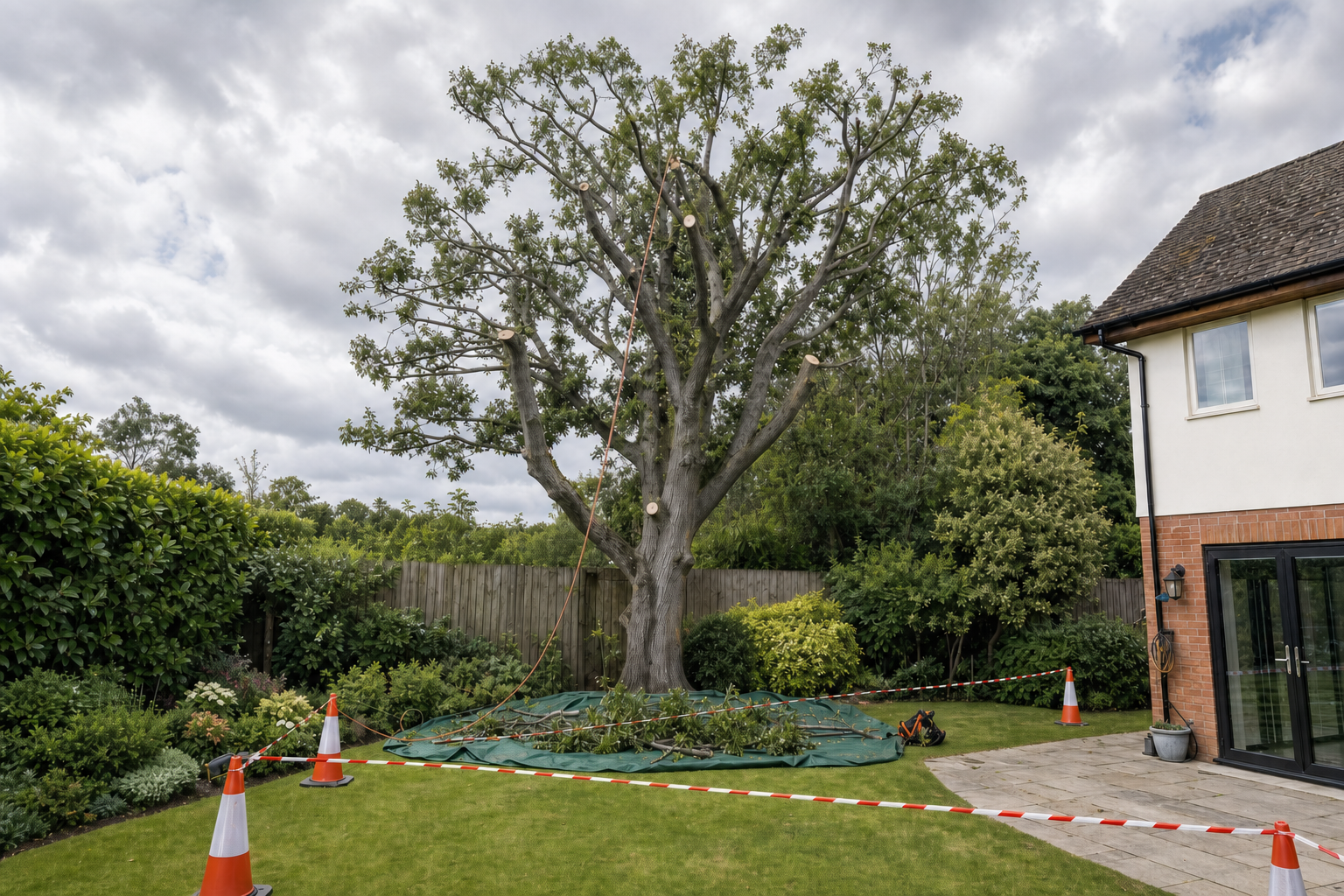
More light and clearance without losing the tree's shape
Clear purpose for the cut
We explain whether pruning or crown thinning better suits the issue you want resolved.
Light without harsh loss
Selective canopy work can ease density while keeping the overall outline intact.
Balanced final shape
Requested clearance is weighed against the tree's health and proportions.
Know the difference before deciding the work
Pruning and crown thinning are often mentioned together, but they are not the same thing. Selective pruning is used to deal with damaged, crossing, poorly placed or obstructive growth while keeping the tree in an appropriate shape. Crown thinning removes selected growth within the canopy to reduce density and improve light passage while retaining the overall outline. Knowing which one suits the tree stops you asking for a result the tree should not really be pushed towards. Many homeowners call Cutaways Treecare & Landscaping when they want more light or clearance, but not a tree that ends up looking harsh or badly cut back.

The tree decides how far the work should go
Species, maturity, condition, position and the reason for intervention all influence the right approach. A young tree, a mature specimen over a boundary and a canopy close to buildings do not all need the same response. We aim for a sensible balance between the clearance you want and the healthy, well-proportioned canopy the tree still needs to retain. When you discuss the work with Cutaways Treecare & Landscaping in Westerham, we explain the likely visual result so expectations are clear before any cutting starts.
Frequently asked questions
What is the difference between pruning and crown thinning?
Pruning usually targets specific branches that are damaged, crossing, poorly placed or causing obstruction. Crown thinning is different because it reduces density within the canopy more selectively while keeping the overall outline. The two jobs can look similar in conversation, but the purpose and the visual result are not the same.
Can you let in more light without stripping the tree back hard?
Often, yes, but the answer depends on the species, condition and structure of the tree. Crown thinning can improve light passage by reducing canopy density without removing the whole outline. We explain what is realistic, because more clearance is not always the same thing as a healthy or well-balanced result.
How do you decide how much growth to remove?
We assess the tree's condition, maturity, position and the reason you want the work done. The aim is to create a sensible improvement while retaining a healthy form. We do not chase a requested gap or shape if it would leave the tree looking poor or push the work further than the tree should reasonably take.